Stiker Kustom

Stiker Kustom

Zigpac memproduksi stiker kustom dan label grosir, termasuk stiker vinyl die cut, label hologram, label emboss, dan solusi kemasan untuk merek serta promosi.

Kami tidak dapat menemukan produk yang sesuai dengan pilihannya.

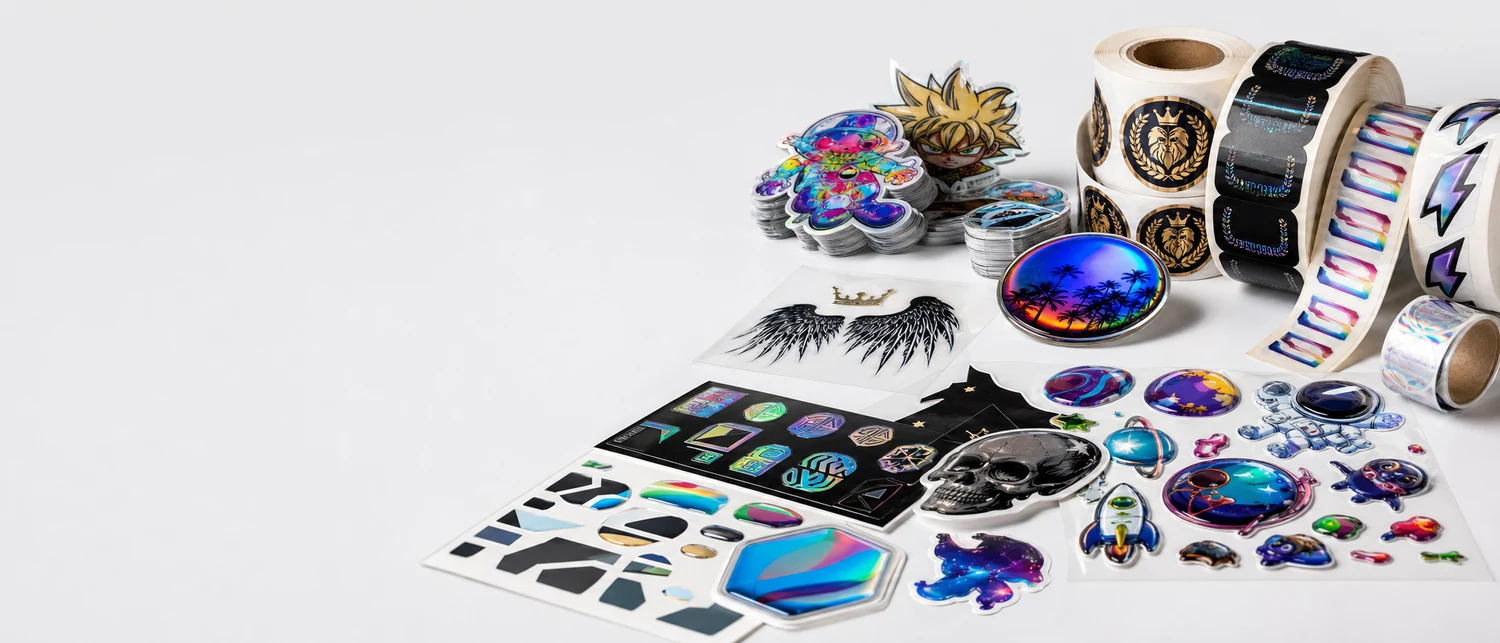
Assortment of custom stickers including die-cut vinyl, holographic, epoxy, and specialty types on a clean workspace

Custom stickers are precision-printed adhesive products manufactured to a buyer's exact specifications — from a 2-inch vinyl die-cut logo to a government-grade holographic ID overlay. The global custom sticker printing market reached US $1.6 billion in 2024[1] and is expanding at a 10.4 % CAGR through 2030, driven by brand personalization, e-commerce packaging, and anti-counterfeiting demand. This guide maps every major sticker type — 30 categories across 7 material families — so you can match the right product to the right job without wading through dozens of vendor sites.

Choosing the wrong sticker type is an expensive mistake. A paper label on an outdoor cooler peels in a week. A standard vinyl decal on a government ID does nothing to stop forgery. And ordering 5,000 units of the wrong finish means dead inventory and a wasted production run. The real problem isn't that custom stickers are complicated — it's that most buyers never see the full landscape of what's possible. They default to "vinyl die-cut" because that's what shows up first on Google, missing 29 other types that might fit their use case better, cheaper, or with stronger brand impact. This page fixes that: a single reference covering every sticker category zigpac manufactures, with material specs, ideal applications, and direct links to each product line.

Table of Contents

1. What Are Custom Stickers?

At the broadest level, a custom sticker is any adhesive-backed graphic produced to a customer's unique design, size, shape, or material specification. "Custom" separates these products from generic stock stickers: every element — artwork, die-line, adhesive strength, surface finish — is tailored to a specific brand, campaign, or functional requirement.

The category spans an enormous range. On one end sits a 50-cent vinyl laptop decal ordered by a college student. On the other sits a serialized holographic overlay laminated onto a state driver's license to prevent forgery. Between those extremes live roll labels for craft-beer bottles, scratch-off stickers for promotional campaigns, embroidered patches for military uniforms, and epoxy-dome badges for luxury electronics. Based on industry patterns, the buyer mix splits roughly 55 % B2B (brands, retailers, government agencies), 30 % B2C (consumers, parents, hobbyists), and 15 % independent creators selling on platforms like Etsy.

Understanding which type you actually need — and what material, adhesive, and finish it requires — is the single most important decision in any custom sticker project. The directory below breaks down every option.

2. Sticker Type Directory: 30 Types Across 7 Categories

We group all 30 sticker types into seven families based on their primary material, manufacturing process, or application context. Within each group, products share baseline characteristics but differ in specific use cases, price points, and order requirements. Use the internal links to jump directly to any product category page for detailed specs and quotes.

Row of vinyl-based custom sticker types: die-cut stickers, roll labels, transfer decals, sticker sheets, wall decals

A. Vinyl-Based Stickers — The Industry Standard

Vinyl (PVC) and paper-based pressure-sensitive adhesives account for the vast majority of custom sticker orders worldwide. The reason is simple: vinyl is waterproof, UV-resistant, flexible enough to conform to curved surfaces, and durable enough to last 2–5+ years outdoors[4] with proper lamination. For most first-time buyers, a vinyl-based product is the default starting point — and within this group, six distinct product formats serve different ordering and application needs.

Custom Die Cut Stickers — zigpac's Entry-Level Best Seller

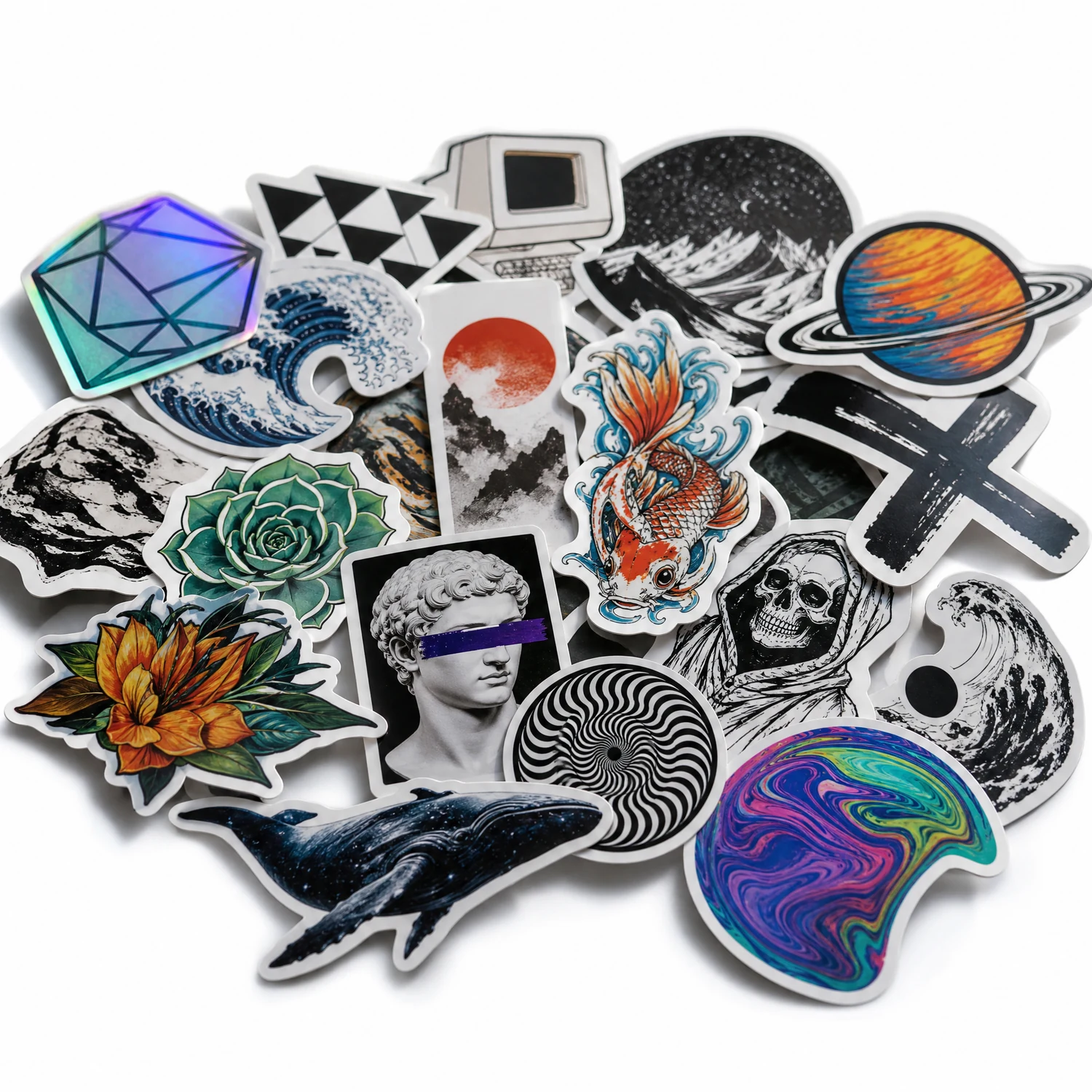
Die-cut stickers are contour-cut to follow the exact outline of your design, eliminating the rectangular border found on kiss-cut or sheet stickers. The result is a clean, professional shape — whether that's a company logo, mascot, or product icon — printed on premium vinyl with a laminate overcoat for scratch and UV protection.

This is the single most popular custom sticker format in the United States, and for good reason. It works for almost everything: product packaging inserts, laptop and water-bottle branding, trade-show giveaways, band merch, and retail shelf labeling. The contour cut itself is produced by a plotter or laser cutter tracing a vector die-line around the artwork, which means intricate shapes (including interior cut-outs) are feasible at scale.

At zigpac, Custom Die Cut Stickers represent the core product line: 4 active SKUs covering the most common size and finish combinations. We print on thick vinyl stock with a waterproof matte or gloss laminate, and all die-cut orders go through a free digital proof cycle before production. For buyers evaluating custom stickers for the first time, this is the category to start with — it covers the broadest set of use cases at the most competitive per-unit cost when ordered in bulk. Explore Custom Die Cut Stickers →

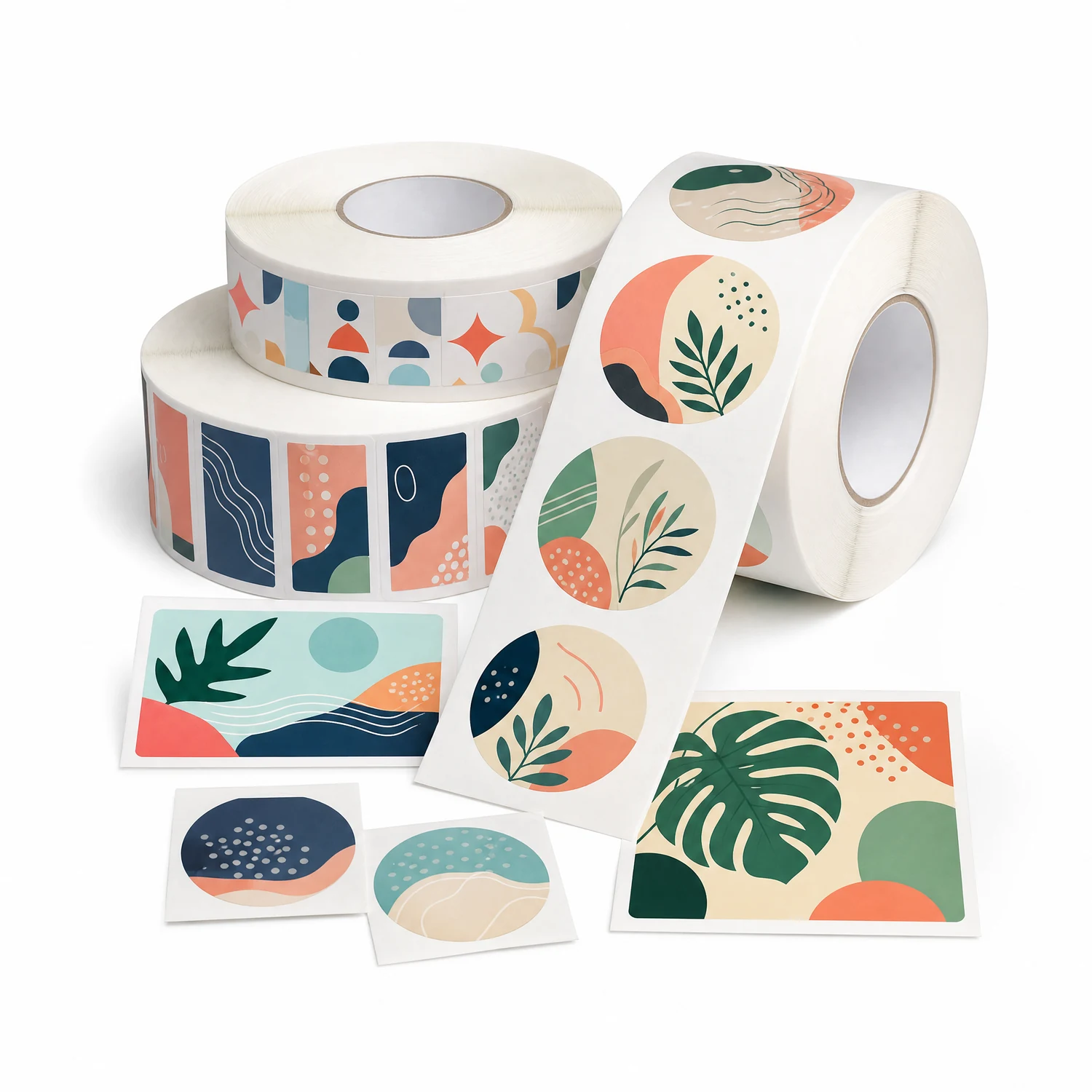
Custom Roll Labels — Pre-cut labels wound onto a continuous roll, designed for high-volume application by hand or automatic dispensers. Roll labels are the standard for product packaging lines: cosmetics jars, food containers, beverage bottles, and candle tins. Available in vinyl or BOPP (biaxially oriented polypropylene) for food-safe and freezer-grade applications. If you apply more than 200 labels per day, roll format cuts handling time by roughly 60 % compared to sheet-fed alternatives. Explore Roll Labels →

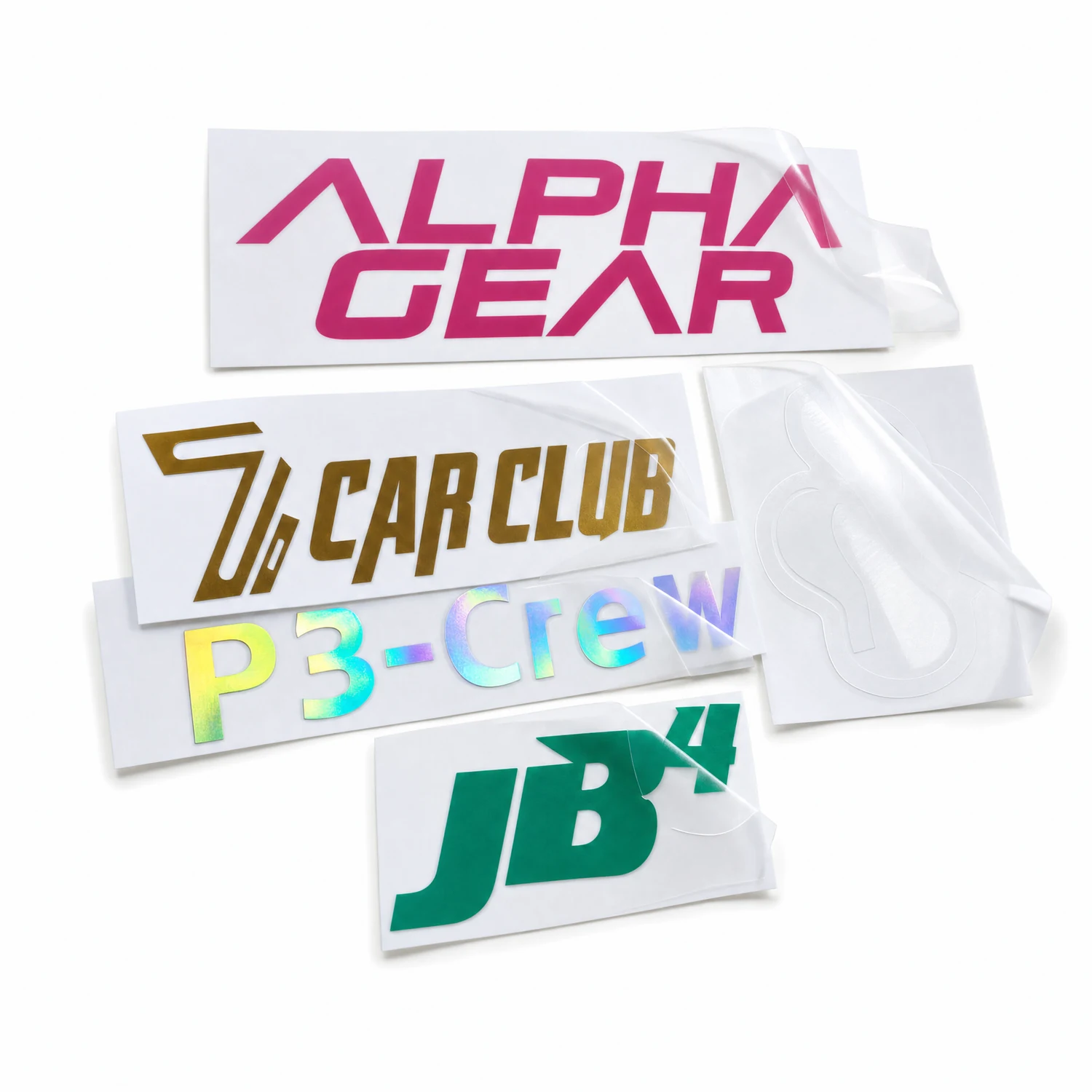
Custom Transfer Decal Stickers — A carrier film holds the design in position until pressed onto the target surface, then peels away to leave only the graphic. Transfer decals are the go-to format for storefront windows, vehicle lettering, and any application requiring precise multi-element placement. They work on glass, painted metal, and smooth plastics. Explore Transfer Decals →

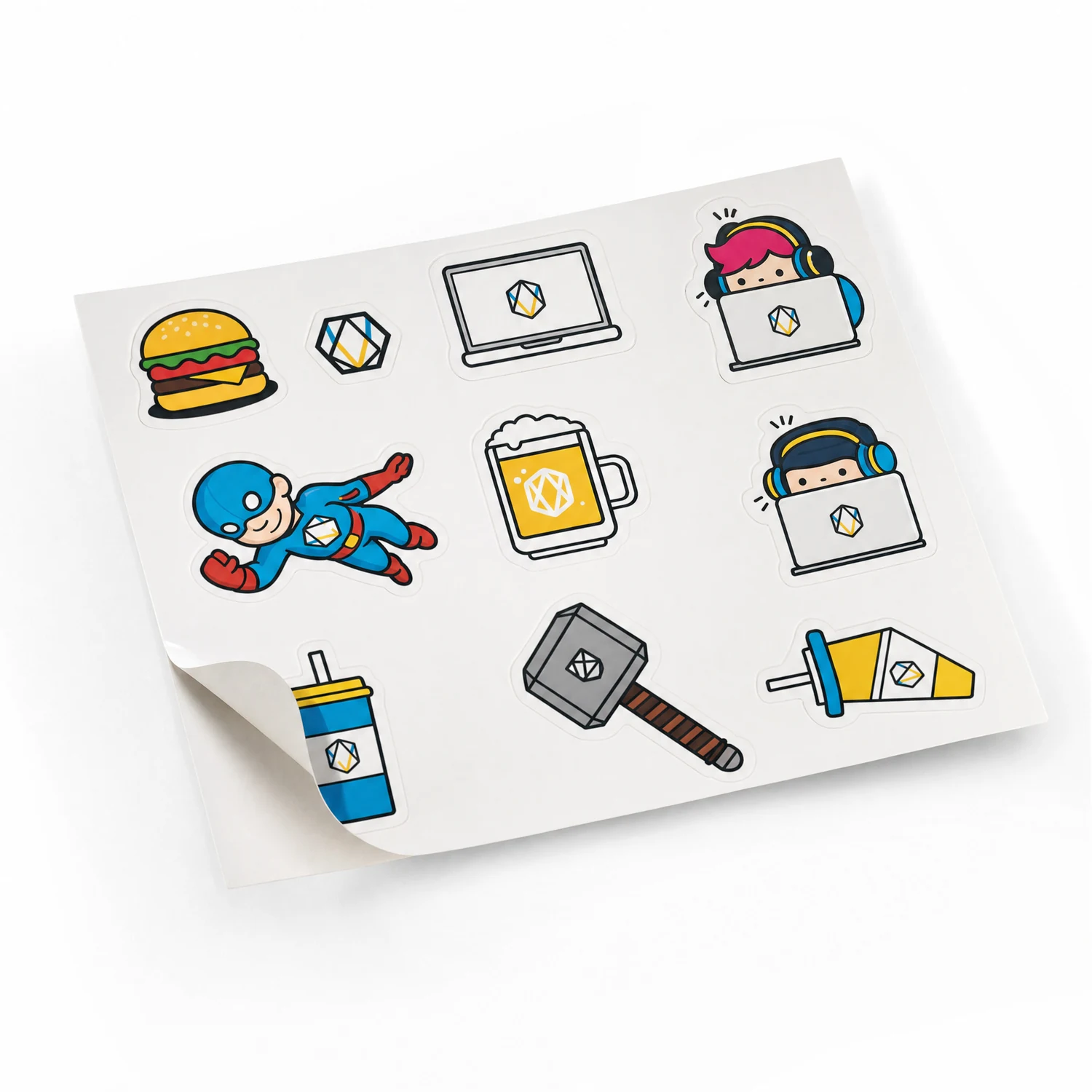
Custom Sticker Sheets — Multiple designs kiss-cut onto a single backing sheet, allowing recipients to peel and choose. Sticker sheets are ideal for variety packs, children's activity sets, planner stickers, and branded merch bundles where offering 6–12 designs on one sheet increases perceived value. Explore Sticker Sheets →

Custom Wall Stickers — Large-format vinyl decals with repositionable or removable adhesive, engineered for interior walls. Used for office branding, nursery décor, retail visual merchandising, and event backdrops. The adhesive is formulated to peel cleanly without damaging painted drywall or wallpaper. Explore Wall Stickers →

Custom Sticker Notes — Repositionable adhesive notepad-style stickers, combining the utility of sticky notes with branded printing. Used for office supplies, promotional giveaways, and organizational labeling where the sticker needs to be moved or replaced periodically. Explore Sticker Notes →

Holographic ID overlay and custom hologram stickers displaying rainbow light-diffraction patterns

B. Holographic & Security Stickers

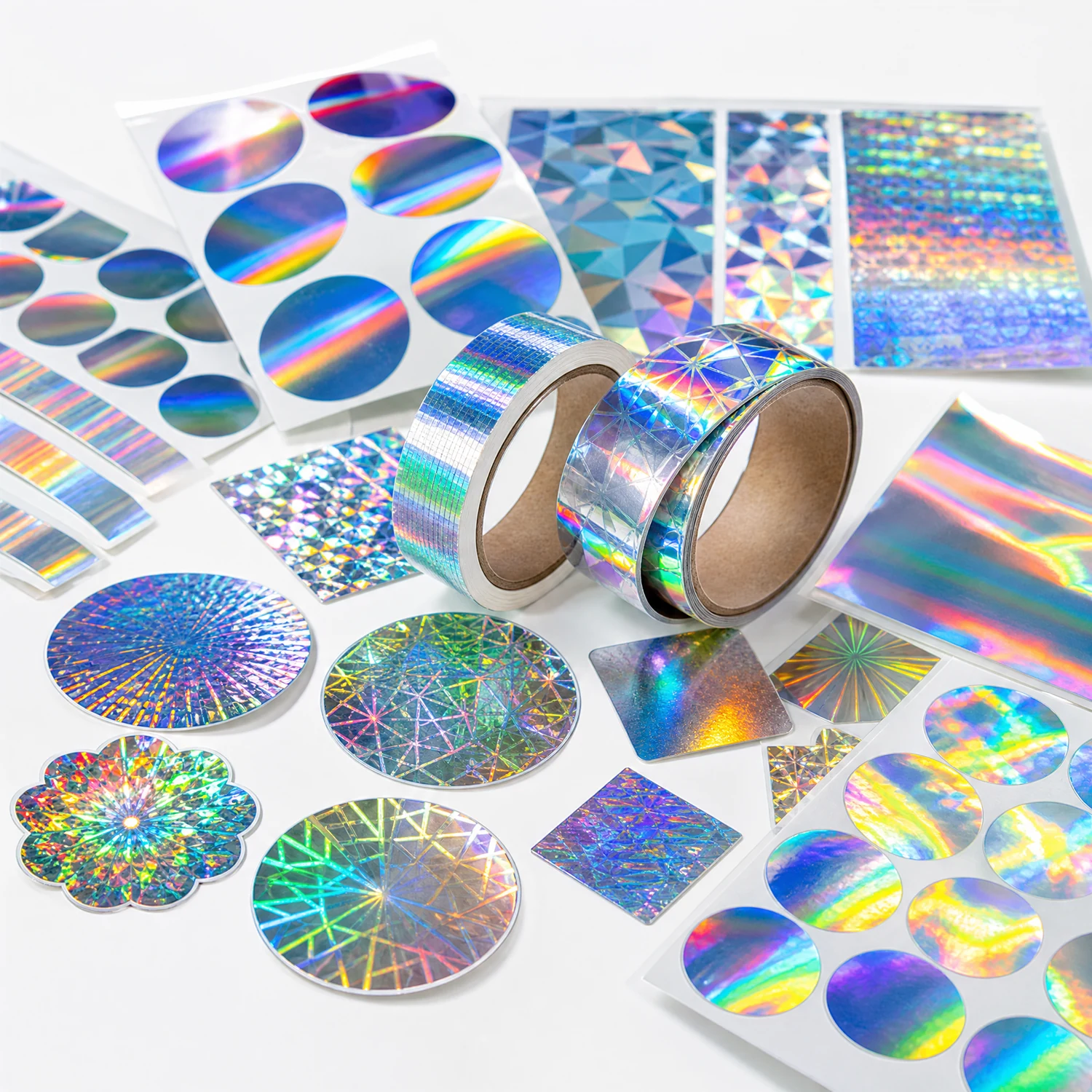
Holographic products use PET (polyethylene terephthalate) film embedded with micro-patterns that diffract light into shifting, three-dimensional visual effects. These effects are classified as Optically Variable Devices (OVDs)[2], and they are extremely difficult to replicate with consumer-grade printing or scanning equipment. This makes holographic stickers the primary tool for document authentication, brand protection, and anti-counterfeiting across government, pharmaceutical, and luxury-goods sectors.

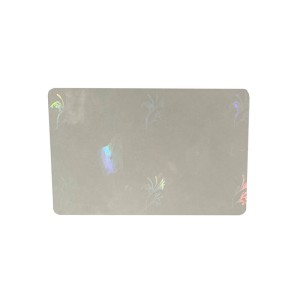
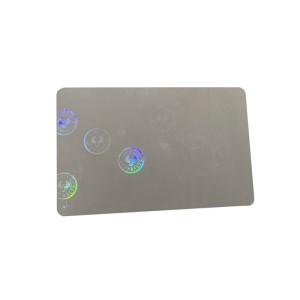
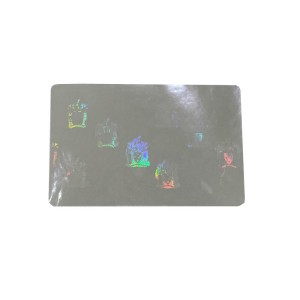
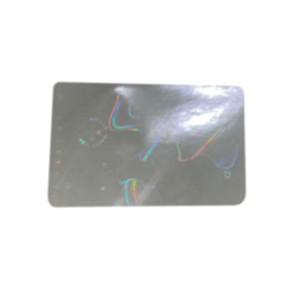
Wholesale ID Hologram Overlay — Government-Grade Document Security

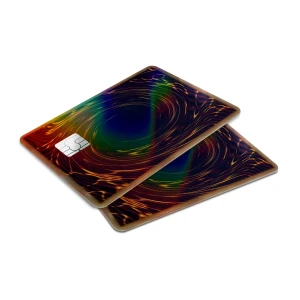
A holographic overlay is a thin, transparent film featuring custom holographic imagery — logos, microtext, kinetic effects, serialized numbering — applied over ID cards, certificates, passports, or licenses without obscuring the underlying information. The overlay adds a visually distinctive, tamper-evident security layer that is nearly impossible to duplicate with commercial printing equipment.

The manufacturing process starts with creating a master hologram (the "shim") using laser origination, a step that alone costs thousands of dollars and requires specialized facilities. The shim is then replicated onto PET film in a controlled environment. Security features can include 2D/3D depth effects, color-shift elements visible at specific angles, guilloche patterns, covert UV-reactive marks readable only under specialized equipment, and tamper-evident adhesive that self-destructs if removal is attempted.

This is zigpac's highest-value product line: Wholesale ID Hologram Overlay carries 7 active SKUs covering overlays for U.S. state IDs, employee badges, educational certificates, and pharmaceutical packaging. Our facility operates under strict design-security protocols aligned with IHMA (International Hologram Manufacturers Association)[3] best practices, ensuring that your custom hologram design is never exposed to unauthorized parties. For organizations requiring batch serialization, covert forensic features, or full-card laminate formats, this is the category to explore. Explore ID Hologram Overlays →

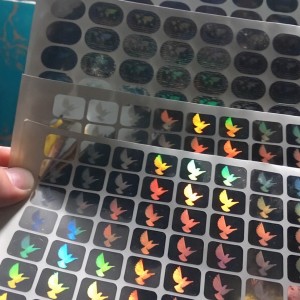
Custom Hologram Stickers — Standalone adhesive-backed holographic labels used for brand authentication, product sealing, and visual impact on packaging. Unlike full-card overlays, these are typically patch-format stickers applied to individual products, boxes, or certificates. They combine the same OVD security technology with the convenience of a peel-and-stick format. Common applications include electronics authentication, luxury-goods tamper seals, and event-ticket security. Explore Hologram Stickers →

C. 3D & Textured Stickers

These four types break the flat plane of traditional stickers, adding tactile dimension — raised domes, foam padding, embedded crystals, or vacuum-formed shells. The result is a product you can feel with your fingertips, which increases perceived value and makes the sticker stand out in contexts where visual differentiation matters: luxury packaging, children's products, gift items, and premium brand labels.

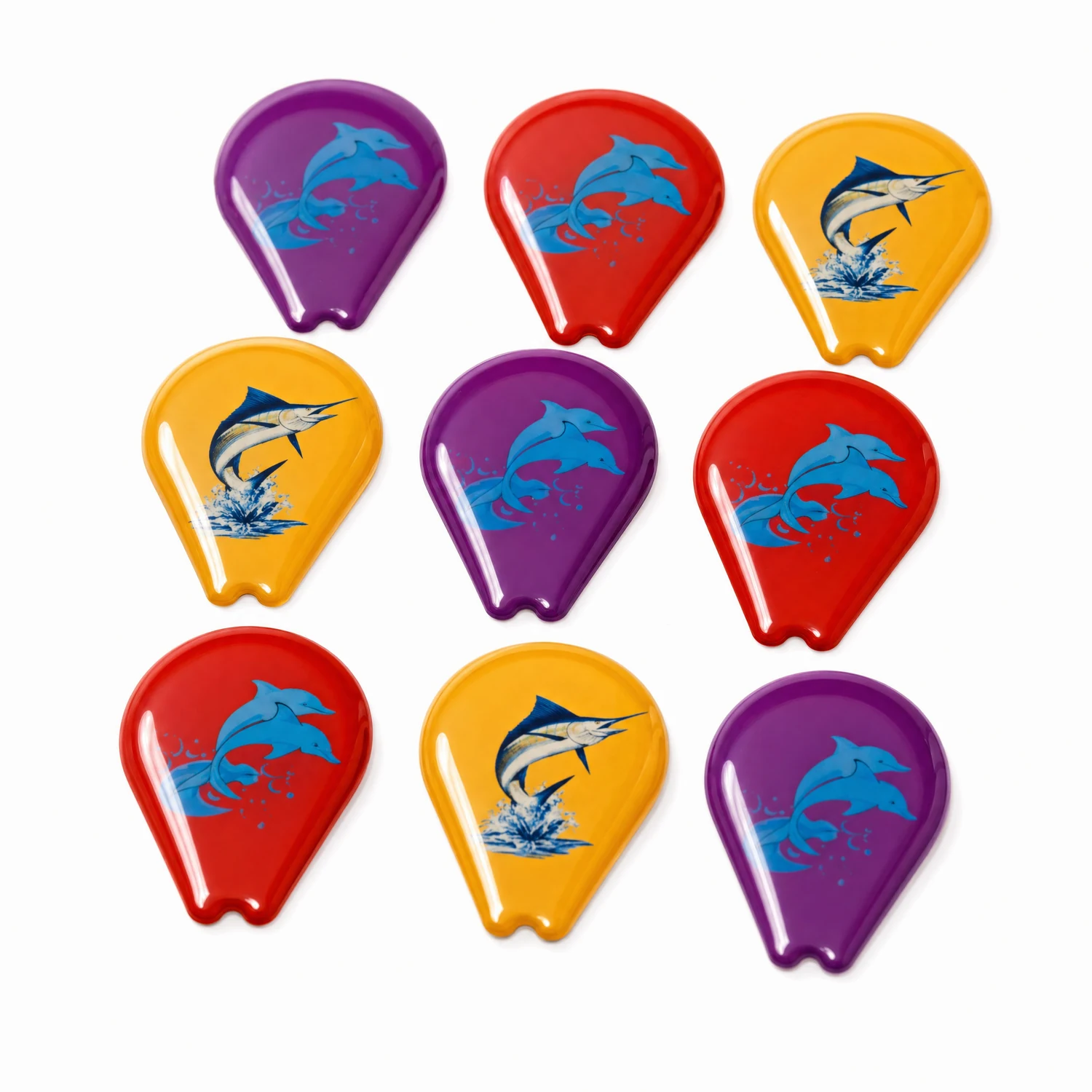
Custom Epoxy Stickers — A clear polyurethane resin is poured over a printed design and UV-cured to form a glossy, bubble-free dome. The result is a glass-like 3D surface that is water-resistant, scratch-proof, and highly reflective. Used for high-end brand badges, equipment nameplates, and electronics logos where a premium, jewelry-like finish justifies the higher per-unit cost. Explore Epoxy Stickers →

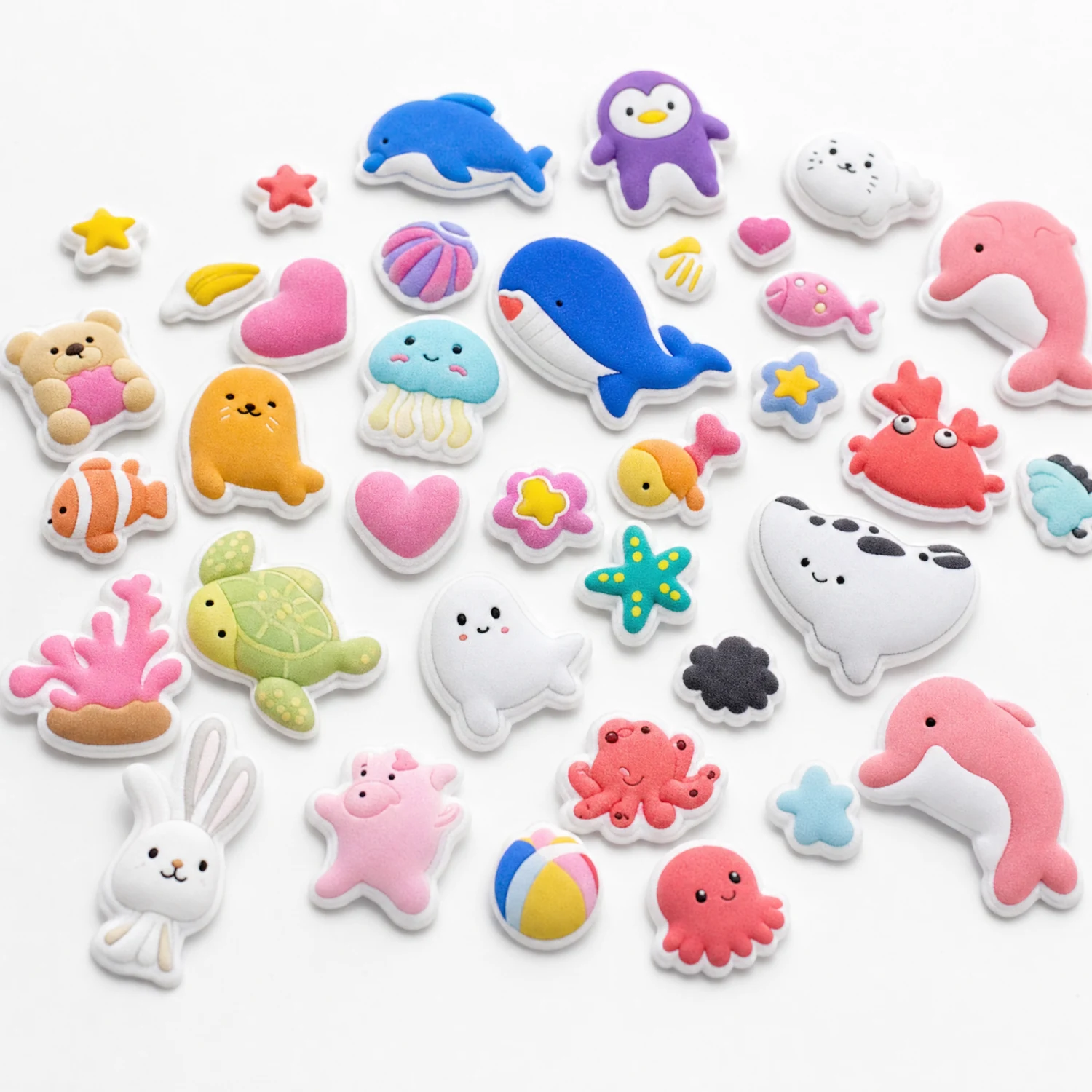
Custom Puffy Stickers — Printed on foam-backed material that gives each sticker a soft, cushioned 3D feel. The playful, squeezable texture is specifically designed for children's markets: educational rewards, toy packaging, party favors, and collectible sets. All materials are non-toxic and conform to child-safety standards. Explore Puffy Stickers →

Custom Rhinestone Stickers — Acrylic or glass crystals arranged in custom patterns on an adhesive carrier, creating a sparkling mosaic effect. Used for fashion accessories, phone case decoration, wedding stationery, and cosmetic packaging where visual glamour is the primary design goal. Explore Rhinestone Stickers →

Custom Blister Stickers — PVC vacuum-formed into a raised 3D shape, then printed and backed with adhesive. Blister stickers complement blister packaging and add dimensional branding to retail displays, toy packaging, and promotional inserts where the sticker itself becomes part of the product presentation. Explore Blister Stickers →

D. Application-Specific Stickers

Each type in this group exists because its target application imposes unique material, safety, or functional requirements that standard vinyl cannot meet. A tattoo sticker must be skin-safe. A scratch-off must conceal information until manually scratched. A glow-in-the-dark sticker must absorb and re-emit light. These are purpose-built products with clearly defined audiences.

Custom Tattoo Stickers — Temporary tattoos printed on water-slide transfer paper using skin-safe, FDA-compliant inks. Applied by wetting the backing and pressing onto skin, lasting 2–5 days. Used by event promoters, brands running experiential campaigns, bachelorette parties, and children's entertainment. Fully customizable with photographic or vector artwork. Explore Tattoo Stickers →

Custom Nail Stickers — Ultra-thin adhesive decals shaped and sized for fingernails, printed at extremely high resolution to render intricate patterns at miniature scale. Used by nail salons, beauty brands, and DIY nail-art enthusiasts for consistent, repeatable designs without freehand painting. Explore Nail Stickers →

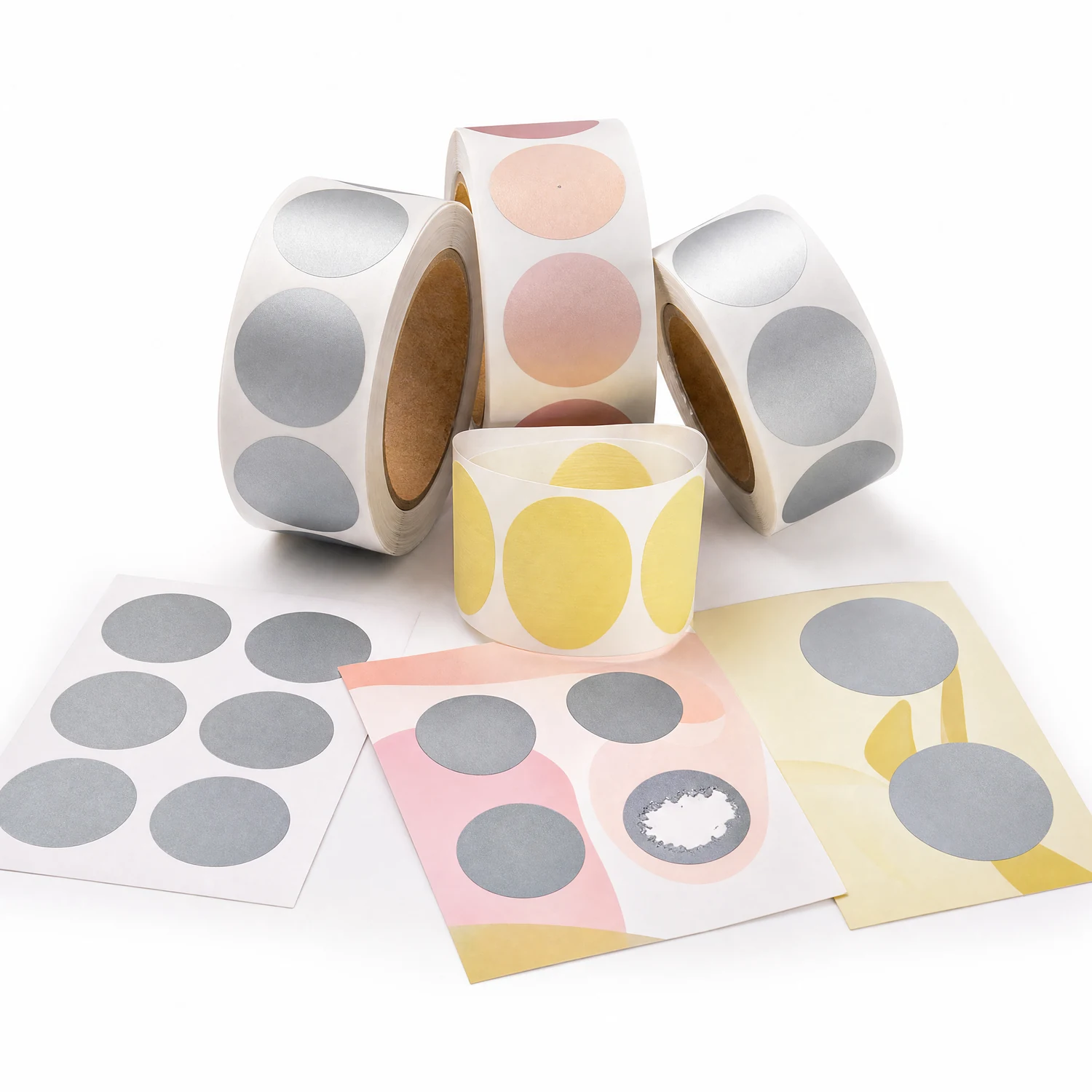
Custom Scratch Off Stickers — A metallic latex layer conceals text, codes, or images until the recipient scratches it away. The core tool for promotional campaigns: discount reveals, contest entries, loyalty rewards, and educational games. Available in silver, gold, or custom-color scratch coatings. Explore Scratch Off Stickers →

Custom Scratch and Sniff Stickers — Microencapsulated fragrance beads are embedded in the ink layer; scratching ruptures the capsules and releases scent. Used for children's educational products, food-brand sampling, real-estate marketing (fresh-baked cookies, anyone?), and multi-sensory promotional materials. Explore Scratch and Sniff Stickers →

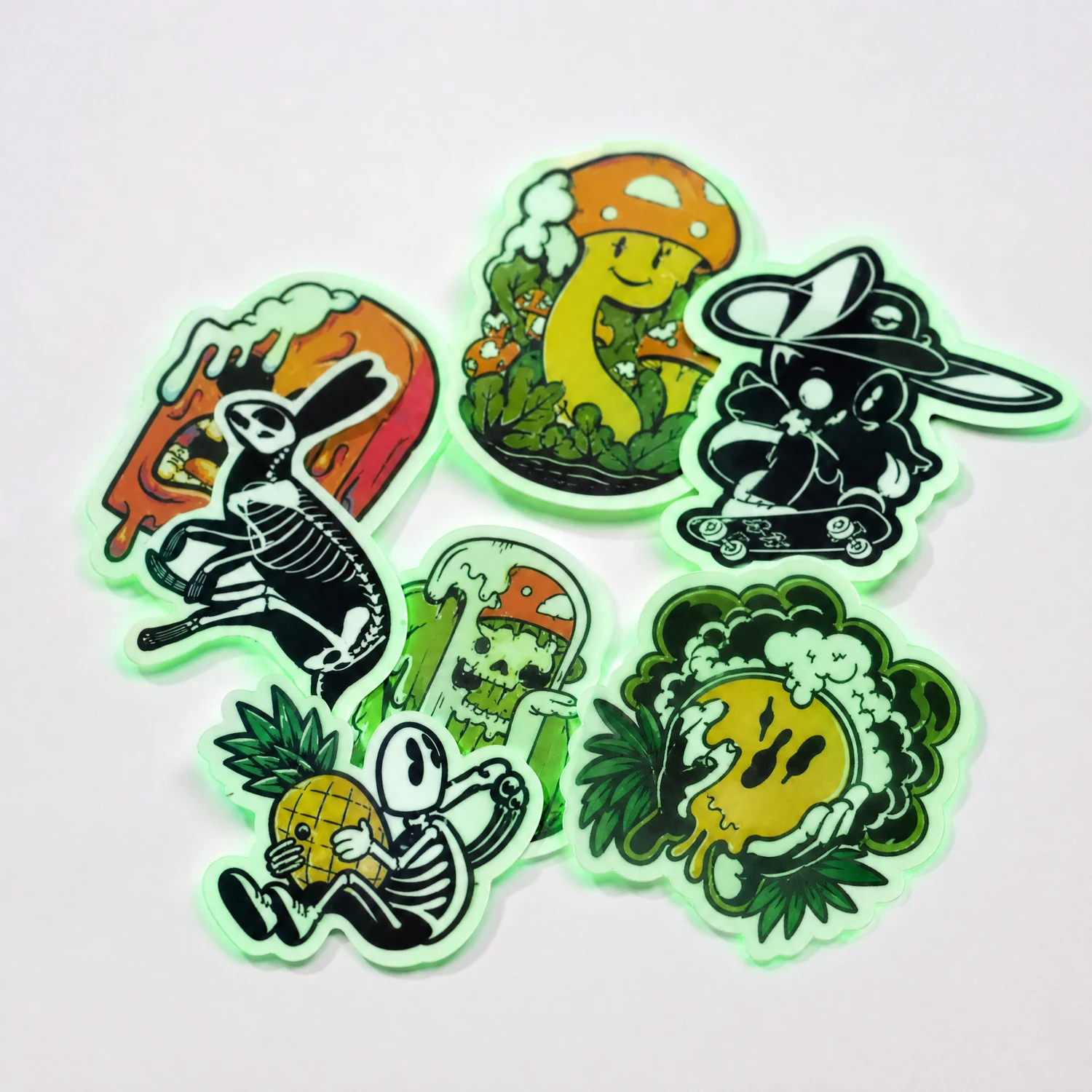
Custom Glow In The Dark Stickers — Printed with phosphorescent ink that absorbs ambient light and re-emits a visible glow in darkness for hours. Practical applications include safety signage (stairwell markers, emergency exits), children's bedroom décor, and nighttime event branding. Explore Glow In The Dark Stickers →

Embroidered patches, custom hang tags, metal labels, and stencil templates arranged on fabric background

E. Non-Traditional Labels & Patches

These four products sit at the boundary of the "sticker" category. They label, brand, or mark items — but their materials and manufacturing processes are fundamentally different from adhesive-backed film printing. Embroidered patches use thread on fabric. Metal labels use etched or stamped aluminum. Understanding that these exist under the custom stickers umbrella helps buyers avoid the common mistake of searching for them as entirely separate product categories.

Custom Embroidery Patches — Thread stitched onto a twill or felt backing, available with iron-on, Velcro, or sew-on attachment. The textile construction gives patches a tactile, premium look that printed stickers cannot replicate. Used for military and law-enforcement insignia, team uniforms, fashion branding, and collectible trading. Explore Embroidery Patches →

Custom Tags — Printed cardstock or specialty paper with a punched hole or string attachment. Hang tags serve as price labels, gift tags, product information carriers, and brand touchpoints on apparel, handmade goods, and retail merchandise. Explore Custom Tags →

Custom Stencils — Laser-cut PET or Mylar templates that act as reusable guides for painting, airbrushing, henna application, or nail art. Not an adhesive product in the traditional sense, but widely searched alongside custom stickers because stencils and stickers share the same die-cutting production infrastructure. Explore Custom Stencils →

Custom Metal Labels — Etched, stamped, or printed on thin aluminum, brass, or stainless-steel stock with permanent adhesive backing. Metal labels resist fading, abrasion, and corrosion under conditions that would destroy vinyl. Used for industrial equipment nameplates, luxury packaging, automotive badges, and corporate asset tracking. Explore Metal Labels →

F. Natural & Eco Material Stickers

Five material types built on natural fibers, plant-derived polymers, or recyclable elastomers. Buyers in this group are making a deliberate material choice: the product's texture, environmental story, or brand positioning depends on not being vinyl. As sustainability becomes a purchasing criterion for more B2B buyers, eco material custom stickers are growing faster than the category average.

Custom Felt Stickers — Die-cut from wool or synthetic felt with adhesive backing, creating a soft, fabric-like surface. Used for scrapbooking, children's craft kits, holiday decorations, and any application where a cozy, handmade aesthetic matters more than weatherproofing. Explore Felt Stickers →

Custom Leather Stickers — Real leather or PU (polyurethane) leather die-cut with adhesive backing. The material conveys premium brand positioning: used for luggage labels, journal covers, whisky-bottle seals, and high-end apparel branding where the sticker functions as a mark of craftsmanship. Explore Leather Stickers →

Custom EVA Foam Stickers — Lightweight, soft, closed-cell EVA foam die-cut into shapes with adhesive backing. Safe, colorful, and easy to peel — designed almost exclusively for children's educational kits, classroom rewards, and DIY craft projects. Explore EVA Foam Stickers →

Custom Rubber Labels — Molded silicone or rubber with a raised 3D logo, attached via sewing or heat-pressing. Extremely durable and flexible, making them the industry standard for sportswear, outdoor gear, handbags, and footwear branding where the label must survive repeated flexing, washing, and UV exposure. Explore Rubber Labels →

Custom TPE Stickers — Thermoplastic elastomer (TPE) is a recyclable, BPA-free material that combines rubber-like flexibility with plastic-like processability. TPE stickers target health-conscious and eco-friendly brands — children's products, wellness packaging, and companies seeking a sustainable alternative to PVC without sacrificing durability. Explore TPE Stickers →

G. Interactive & Creative Effect Stickers

The four types in this group use optical illusions, tactile mimicry, reflective surfaces, or destructible substrates to create experiences that go beyond static decoration. These custom stickers are often the centerpiece of a marketing campaign or packaging concept precisely because they provoke a reaction: tilt it, touch it, try to peel it.

Custom Lenticular Stickers — A Fresnel lens array bonded to a printed image creates the illusion of motion, depth, or image-switching as the viewing angle changes. Lenticular custom stickers are used for collectible trading cards, movie promotions, product packaging that "animates" on the shelf, and any application where visual surprise drives engagement. Explore Lenticular Stickers →

Custom Wax Seal Stickers — Resin-cast 3D replicas of traditional wax seals, backed with adhesive for peel-and-stick application. They replicate the texture, depth, and color of a hand-stamped wax seal without the mess or inconsistency of working with hot wax. Dominant in wedding stationery, luxury mailers, artisan brand packaging, and corporate event invitations. Explore Wax Seal Stickers →

Custom Mirror Stickers — Metallized PET film that reflects like a real mirror, die-cut into custom shapes with adhesive backing. Used for interior décor accents, retail visual merchandising, artistic installations, and any application where adding reflective dimension to a flat surface creates spatial illusion. Explore Mirror Stickers →

Custom Eggshell Stickers — Printed on fragile eggshell paper that shatters into tiny fragments when removal is attempted, making the design impossible to peel cleanly or transfer to another surface. This destructible property serves two very different audiences: street artists and graffiti culture (where permanence is the point) and security teams (where tamper-evidence is the function). Used for anti-tamper seals, one-time-only authentication labels, and urban art. Explore Eggshell Stickers →

3. Materials & Durability Specs

Material selection determines 90 % of a sticker's real-world performance. The table below compares the five primary substrate families used across all 30 custom sticker types. All durability figures assume proper application to clean, dry, non-porous surfaces.

Material Water Resistance UV / Outdoor Life Typical Thickness Best For Limitations
Vinyl (PVC) Fully waterproof 3–5+ years with laminate 3–4 mil (75–100 µm) Die-cuts, roll labels, wall decals, vehicle graphics Not recyclable; softens above 70 °C
BOPP Waterproof 2–3 years 2–3 mil (50–75 µm) Food packaging, freezer labels, cosmetics Less conformable than vinyl on curves
Paper (coated) Not waterproof Indoor only (6–12 months) 3–4 mil Shipping labels, indoor retail, short-term promos Tears, fades, and curls when exposed to moisture
PET (Polyester) Fully waterproof 5–7 years 1–2 mil (25–50 µm) Holographic overlays, metal-look labels, asset tags Rigid; poor conformability on complex curves
Specialty (Epoxy / Felt / TPE / Silicone) Varies by type Varies (1–10 years) Varies widely Niche applications per type Higher MOQ; longer lead time; higher unit cost

Adhesive types matter as much as the face stock. Permanent acrylic adhesive is the default for most custom stickers — it bonds strongly to metal, glass, and plastic within 24 hours. Removable adhesive (used for wall stickers and sticker notes) allows clean peel-off within 6–12 months. Tamper-evident adhesive (used for holographic overlays and security seals) self-destructs or leaves a "VOID" pattern if removal is attempted. Always specify your adhesive requirement at the quoting stage — switching adhesive after production starts is not possible.

For artwork, the industry standard minimum is 300 DPI at final print size[7]. Vector files (AI, EPS, SVG, PDF) are preferred for scalability. Raster formats (PNG, PSD, TIFF) are accepted but must meet the resolution threshold. For holographic products, the design file includes both the visible artwork and the security-feature specification sheet.

4. How to Order Custom Stickers: A 6-Step Workflow

Infographic of 6-step custom sticker ordering process: define specs, upload artwork, review proof, approve, production, delivery

Step 1 — Define your specifications. Start with four decisions: sticker type (from the 30 categories above), size, quantity, and finish (matte, gloss, or specialty). If you're unsure which type fits your project, the directory above maps types to use cases.

Step 2 — Prepare your artwork. Export your design as a vector file (AI/EPS/PDF) or a 300+ DPI raster image at the exact print dimensions. Include a die-line (cut path) on a separate layer if you need a custom contour shape. For multi-color jobs, convert to CMYK color space — RGB files may shift during printing.

Step 3 — Request a quote and submit artwork. Upload your file through the vendor's portal or send it via email. Specify material, adhesive type, finish, and delivery address. Reputable vendors will return a quote within 24 hours for standard products.

Step 4 — Review and approve the digital proof. The vendor generates a proof showing your artwork on the selected material with the die-line applied. Check color accuracy, text legibility, bleed margins, and cut-line placement. Approve to proceed, or request revisions — most vendors offer unlimited revisions at no extra charge.

Step 5 — Production. Standard production runs 3–5 business days for vinyl-based products and 7–14 business days for specialty types (holographic, epoxy, embroidery). Rush options are available at most vendors for time-sensitive orders.

Step 6 — Delivery and quality check. Inspect a sample from the batch upon arrival: verify dimensions, color match, adhesive strength, and die-cut precision. For large orders (1,000+ units), spot-check at least 5 % of the batch. Apply to your target surface within the recommended temperature range (typically 10–35 °C) for optimal adhesion.

5. Vendor Comparison: Where to Buy Custom Stickers in 2026

The U.S. custom sticker market is dominated by a handful of online vendors, each with a distinct positioning. The table below compares the most commonly recommended brands in independent 2026 reviews[6] alongside zigpac.

Vendor Sticker Types Offered Minimum Order Typical Turnaround Strength Limitation
Sticker Mule ~8 (vinyl die-cut, kiss-cut, clear, bumper, labels, magnets, buttons, packaging) 10 units 4 business days + shipping Frictionless ordering; strong durability; Trustpilot 4.7/5 (42K+ reviews) Premium pricing; limited specialty types
CustomStickers.com ~6 (die-cut, kiss-cut, clear, bumper, labels, sheets) No minimum 1–3 business days + shipping Best price-to-quality ratio; free proofs with unlimited revisions; fastest turnaround Focused on vinyl; fewer specialty options
StickerYou ~12 (vinyl, clear, holographic, temp tattoo, labels, pages, iron-ons) No minimum 3–6 business days Wide specialty range; online editor with live preview Standard vinyl pricing above average for bundles; no free human-reviewed proofs
Jukebox Print ~5 (die-cut, sheets, labels, plus business cards and packaging) No minimum 1 business day (stickers) Sharpest print quality in independent tests; human file review Higher per-unit cost on small orders; primarily a general printer
zigpac 30+ types (vinyl, holographic, epoxy, felt, leather, metal, TPE, embroidery, and 22 more) Varies by type (contact for quote) 7–21 business days (OEM manufacturing) Widest type coverage of any single vendor; true OEM/ODM capability; B2B bulk pricing; government-grade holographic overlays; global shipping with customs documentation Longer lead time vs. domestic print-on-demand vendors; not optimized for 10-piece sample runs

How to choose: If you need 50–500 standard vinyl die-cuts shipped within the U.S. in under a week, domestic vendors like CustomStickers.com or Sticker Mule are hard to beat on speed. If you need a specialty type that those vendors don't carry — holographic security overlays, TPE eco-labels, rubber garment labels, lenticular cards, or any of the 20+ types exclusive to OEM manufacturers — zigpac covers the full range under one roof. For B2B buyers placing bulk orders (1,000+ units) across multiple product types, working with a single OEM manufacturer eliminates the coordination overhead of splitting orders across three or four specialized vendors.

6. 2026 Trends Shaping the Custom Sticker Market

Mood board showing holographic sticker finish, AI-generated sticker art, biodegradable label, and NFC smart sticker

Holographic and iridescent finishes go mainstream. Once reserved for security products, rainbow-shift and holographic laminate are now the fastest-growing decorative finish in custom stickers. "Holographic and iridescent finishes continue to dominate premium sticker production in 2026, particularly for beauty, wellness, and lifestyle brands,"[9] notes Printshop by Paperlust. For buyers, this means holographic custom stickers are no longer a niche order — they're a catalog staple.

AI-generated artwork and Y2K revival. AI-generated art, Y2K retro aesthetics, and complex die-cut shapes[8] are the dominant design trends for 2026, according to RareCustom. Buyers are uploading AI-assisted designs with intricate outlines that would have been prohibitively expensive to die-cut five years ago. The combination of AI design tools and precision laser cutting is lowering the barrier to creative, non-rectangular sticker shapes.

Smart stickers with NFC and QR integration. Emerging formats embed NFC chips or printed QR codes directly into the sticker substrate, enabling customers to tap or scan for product authentication, loyalty-program enrollment, or augmented-reality experiences. This trend bridges the physical sticker with digital engagement.

Sustainability pressure accelerates eco-material adoption. Demand for biodegradable, recycled, and plant-based sticker materials is growing as B2B buyers face sustainability reporting requirements. TPE, FSC-certified paper, and compostable BOPP are replacing standard PVC in categories where outdoor durability is not the primary requirement. The personalized stickers market is projected to grow from $4.84 billion in 2025 to $8.45 billion by 2035[10], with sustainability as a key growth driver.

Soft-touch matte and textured laminates. Beyond gloss and standard matte, soft-touch laminate (a velvety-feel overcoat) is increasingly requested for premium brands. Combined with spot-UV or embossed elements, textured finishes transform a flat sticker into a tactile brand experience.

7. Frequently Asked Questions

How long do custom stickers last outdoors?

Premium vinyl custom stickers with UV-protective laminate typically last 3–5 years outdoors under normal weather conditions. PET-based products (holographic overlays, metal-look labels) can exceed 5–7 years. Paper stickers are indoor-only. Longevity depends on surface preparation, UV exposure, and adhesive type. Always apply to clean, dry, non-porous surfaces for maximum lifespan.

Are custom stickers waterproof?

Vinyl and BOPP custom stickers with laminate coating are fully waterproof and dishwasher-safe. Paper stickers are not waterproof. When ordering, confirm that the product specification includes "laminate" or "overcoat" — unlaminated vinyl is water-resistant but not fully waterproof over extended submersion.

What is the minimum order quantity?

It depends on the vendor and sticker type. Domestic print-on-demand vendors (Sticker Mule, CustomStickers.com) offer minimums as low as 1–10 units. OEM manufacturers like zigpac typically require higher minimums (50–500+ depending on type) because each order involves custom tooling, material setup, and quality-control steps. For specialty types like holographic overlays or epoxy stickers, MOQs are higher due to the complexity of the production process.

What file format should I submit for custom sticker artwork?

Vector files (AI, EPS, SVG, PDF) are preferred because they scale without quality loss. If submitting raster images, use PNG or TIFF at a minimum of 300 DPI at the final print size. Include a die-line (cut path) on a separate layer for contour-cut shapes. Convert colors to CMYK before submission — RGB files may produce unexpected color shifts during printing.

How do I choose between die-cut, kiss-cut, and sheet stickers?

Die-cut stickers are contour-cut through both the vinyl and the backing, producing an individually shaped piece. Kiss-cut stickers cut only through the vinyl, leaving the design on a rectangular or custom-shaped backing — easier to peel. Sticker sheets contain multiple kiss-cut designs on a single backing. Choose die-cut for individually handed-out or packaged stickers, kiss-cut for easy peeling, and sheets for variety packs or bundled sets.

Can I get a proof before full production?

Yes. Most reputable vendors provide free digital proofs showing your artwork on the selected material with the die-line applied. Some offer physical sample packs at low cost. At zigpac, every order goes through a mandatory proof-approval step — production does not begin until you sign off on the proof.

What's the difference between holographic stickers and holographic overlays?

Holographic stickers are standalone adhesive labels used for brand authentication and decoration. Holographic overlays are transparent films applied over existing documents (IDs, certificates) to add a tamper-evident security layer without obscuring the information underneath. Overlays require custom mastering (creating a unique holographic shim), making them significantly more secure — and more expensive — than standard holographic stickers.

Are custom stickers safe for children's products?

It depends on the material. EVA foam stickers, puffy stickers, and TPE stickers are specifically formulated for child safety (non-toxic, BPA-free, compliant with CPSIA/EN71 standards). Temporary tattoo stickers use FDA-compliant skin-safe inks. Standard vinyl stickers are generally safe for supervised use but are not designed for skin contact or oral exposure. Always verify material certifications with your vendor for products intended for children under 3.

8. Key Takeaways

  • The custom sticker printing market hit $1.6 billion in 2024 and is growing at 10.4 % CAGR. — Grand View Research (Source)
  • 30 distinct sticker types exist across 7 material families — from standard vinyl die-cuts to government-grade holographic overlays, and most buyers only know about 3–5 of them.
  • Vinyl with laminate lasts 3–5+ years outdoors — confirmed across multiple independent durability guides (Source)
  • Artwork must be 300 DPI minimum at final print size — vector formats (AI/EPS/PDF) preferred for best die-cut precision (Source)
  • Holographic finishes moved from security niche to mainstream decorative trend in 2026 — now requested by beauty, wellness, and lifestyle brands (Source)
  • For B2B bulk buyers, a single OEM vendor covering 30+ types eliminates multi-vendor coordination overhead — zigpac is one of the few manufacturers offering the full range under one roof.

9. Conclusion

Custom stickers are not a single product — they are a category of 30+ distinct products, each engineered for a specific material, application, and buyer need. The difference between a successful sticker project and a wasted budget usually comes down to one decision: choosing the right type before committing to a production run.

Use the directory above to identify which of the 30 types matches your project. Compare materials using the durability table. Follow the 6-step ordering workflow to avoid the most common sourcing mistakes. And if your project spans multiple sticker types — vinyl die-cuts for retail packaging, holographic overlays for document security, embroidered patches for uniforms — consider working with a single OEM manufacturer who covers the full range.

Ready to get started? Browse the Custom Die Cut Stickers for general-purpose orders or explore the Wholesale ID Hologram Overlay for security applications. For a custom quote across any of our 30 sticker types, contact the zigpac team — we handle everything from design proofing through production to global shipping.


[1] Grand View Research: Global custom printing stickers market valued at US $1.6 billion in 2024, projected CAGR 10.4 % through 2030.

[2] Optically Variable Device (OVD): A security feature whose appearance changes with the viewing angle, making it extremely difficult to reproduce with standard printing equipment.

[3] IHMA (International Hologram Manufacturers Association): The global body setting best-practice standards for secure holographic manufacturing and anti-counterfeiting.

[4] StickerGenius: Comprehensive durability guide comparing indoor vs. outdoor sticker lifespan across materials.

[5] Sticker Mule: Material guide covering vinyl, paper, BOPP, and specialty substrates with adhesive specifications.

[6] PrintReviewer: Independent ranking of best sticker companies in 2026, tested for print quality, durability, pricing, and turnaround time.

[7] StickerApp: Artwork resolution requirements — 300 DPI minimum at final print size for high-quality output.

[8] RareCustom: 2026 custom sticker design trends including AI-generated art, Y2K revival, smart stickers, and complex die-cut shapes.

[9] Printshop by Paperlust: Top 10 sticker trends in 2026, highlighting holographic and iridescent finish dominance in premium markets.

[10] Towards Packaging: Personalized stickers market projected to grow from $4.84 billion (2025) to $8.45 billion (2035) at 5.73 % CAGR.